Train Miner: Idle Railway Game
- 4.2
- Rating
- 10.00M
- Installs
- Free
- Price
 Analysis by App-foxy
I went into Train Miner: Idle Railway Game expecting a lightweight rail-themed time filler, and that is exactly where it works best. This is a free simulation game from CASUAL AZUR GAMES built around expanding a railway operation through short, simple decisions: collect resources, improve the train, clear obstacles, and keep the network moving. It is easy to understand within minutes, but the better question is whether its small decisions remain interesting after the novelty fades.
My answer is fairly positive, with an important condition. The game suits players who enjoy gradual progress, compact upgrade loops, and something they can check for a few minutes at a time. It is less convincing for anyone looking for a detailed railroad management simulator, a deep economy, or a long-form strategy game where every choice permanently reshapes a complicated network. The appeal is its accessibility rather than realism.
That balance helps explain its broad reach. The game has passed 10 million installs and holds a 4.4 average from roughly 179 thousand ratings, which places it comfortably among the more visible casual simulation games. I would not treat popularity as proof that it will suit everyone, but it does signal that the basic loop is approachable and easy to return to.
You May Also Like

 Blood Strike: 2.5 Anniversary
Blood Strike’s Loadouts Turn Every Drop Into a Tactical Gamble
A close look at Blood Strike’s custom loadouts: how fast access to signature weapons reshapes its battle royale rhythm, rewards preparation, and narrows the gap between fights.

 Pandora - Music & Podcasts
Pandora’s Music Is Easy to Start, but Harder to Recover
Pandora’s strength is its low-effort path from a seed to a station. Its weak spot is how much confidence it asks you to place in connection, setup, and quiet recovery.

 8 Ball Pool
 Is Built on Rivalries, Rematches, and Routine
A close look at the rivalries, rematches, shared routines, and unanswered safety questions that turn a quick pool match into a persistent mobile community.

 Samsung Music
’s Quiet Strength Is Playing What You Already Own
Its reach comes less from spectacle than from dependable access to a personal library. That simplicity is both the app’s strongest retention engine and its ceiling.

 AccuWeather: Weather Radar
AccuWeather Review: A Quick, Clear Forecast for Everyday Decisions
For everyday plans, the best forecast is the one you can understand quickly. AccuWeather makes rain timing, radar, and local conditions easy to act on, with a few trade-offs.

 Hill Climb Racing
Why Hill Climb Racing Still Turns Crashes Into One More Run
A tiny car, a bumpy hill and one more upgrade: Hill Climb Racing keeps resurfacing because its simple chaos makes every near-miss feel personal.
More From Our News Desk



How the railway decisions actually feel
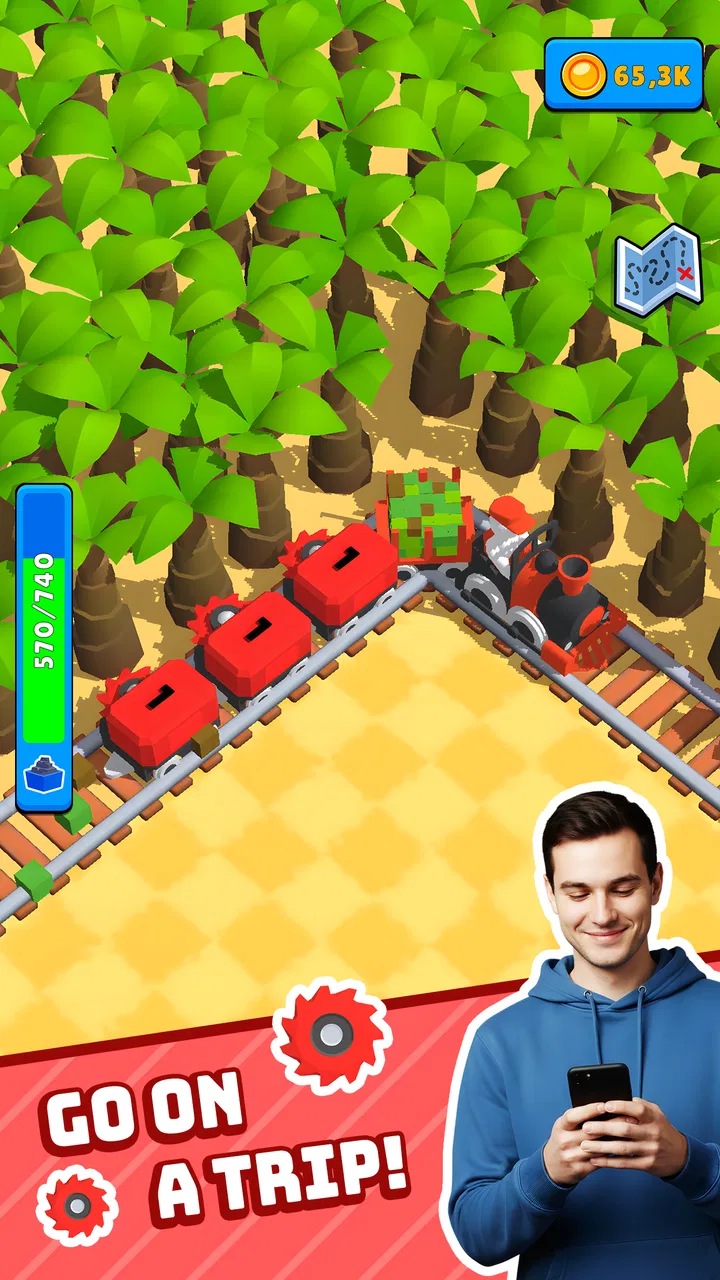
The first thing I noticed is that Train Miner keeps its central task readable. You are not buried under a large control panel or asked to learn a railway timetable before making progress. The train moves through a world that needs to be opened and developed, while your job is to decide how to use the available progress efficiently. Cutting through trees and clearing the route gives the game a more physical feeling than a conventional menu-based idle title.
That physical interaction matters. Instead of simply tapping an upgrade button and watching a number rise, I felt as though I was preparing the next stretch of the route. The train is both the tool and the reason to keep expanding. This gives each short session a visible purpose: remove the current obstruction, gather enough value to improve the operation, and continue toward the next section.
The decision space is intentionally narrow, but it is not completely empty. A useful early habit is to avoid spending every resource the moment it becomes available. I found it more satisfying to think one step ahead and ask whether an upgrade would immediately improve the next clearing task or merely make the current screen look stronger. That small planning horizon is where the game creates most of its strategy.
For example, when I had enough progress for an improvement, I tried to judge whether I was about to face a longer stretch of work. If the next section demanded more repeated interaction, improving the train first made more sense than rushing forward with a weaker setup. If the route was already moving comfortably, continuing to clear could be the better choice. The game does not require a spreadsheet, but it rewards resisting automatic taps.
This is also where the idle element changes the rhythm. I could make progress actively, then leave the game and return later expecting the operation to have advanced in some way. That makes it convenient during a commute, a lunch break, or a short wait. The trade-off is that the most involved decisions are separated by periods of passive progress. Players who want constant tactical input may find that rhythm too light.
One practical use case is a player who has only a few minutes between tasks. I can open the game, collect what is ready, make one upgrade decision, clear a nearby obstacle, and close it without losing the thread. It does not demand the uninterrupted attention of a traditional management simulator. That convenience is a genuine strength, especially on a phone.
Planning the next stretch instead of chasing every reward
The most useful mindset is to treat each upgrade as preparation rather than decoration. The game’s presentation encourages quick progress, but I got better results when I looked at the route as a sequence of small commitments. Spending immediately can feel productive, yet saving briefly may let one improvement support several actions in a row.
I also recommend separating active play from passive collection. When I had time to pay attention, I focused on clearing and making a meaningful upgrade. When I was busy, I treated the game as a background progression tool rather than repeatedly opening it for tiny gains. This keeps the idle structure convenient instead of turning it into a compulsion to check constantly.
That approach reveals one of the game’s quiet trade-offs: speed is not always the same as efficiency. Pushing forward quickly feels rewarding, but a poorly timed purchase can leave the next task feeling slower than necessary. The consequences are not severe, and the game remains forgiving, yet the difference is noticeable if you play with a little patience.
There is another planning choice that casual players may overlook. The best session is not necessarily the longest one. Because the loop is built around repeated clearing and upgrading, stopping after a sensible milestone can preserve the feeling of progress. I preferred returning with a clear next objective rather than playing until every action felt automatic.
Risk, reward, and the limits of the idle formula
Train Miner is not a high-risk strategy game in the usual sense. A poor decision will not normally destroy a carefully built railway or force a complete restart. The risk is softer: wasting time, spending resources at an awkward moment, or allowing the loop to become repetitive. That makes the game friendly to newcomers, but it also limits the emotional weight of its choices.
The reward structure is strongest when a visible obstacle gives way and the railway reaches a new stage. I enjoy that sense of opening space and making the train feel more capable. The reward is immediate enough for a short session, while the larger development goal gives me a reason to return later.
However, the same structure can become predictable. Once I understood that progress generally came from repeating the clearing, collecting, and upgrading cycle, the surprise shifted from discovering new systems to optimizing my timing. That is enough for relaxed play, but it may not satisfy someone who needs frequent mechanical twists.
The free entry point is helpful. I could try the game without paying, which makes it easy to judge whether the loop fits my taste. The game includes in-app purchases ranging from $0.99 to $99.99 per item, so players who prefer a completely purchase-free experience should approach the store elements with a clear personal limit. I would decide that limit before playing rather than making an impulse purchase during a progress slowdown.
That is not a criticism unique to this game; it is a common tension in idle simulations. Passive progression can make waiting feel acceptable, but it can also make optional spending seem tempting when I want to accelerate the next milestone. My advice is simple: enjoy the free loop first and only consider a purchase if it improves convenience for you, not because the game has made the normal pace feel like a mistake.
The age rating of Everyone makes the game broadly approachable, including for families looking for a simple train-themed title. Even so, younger players may need guidance around optional purchases. The game is easy to operate, but understanding the difference between patient progression and paid acceleration is a separate matter.
Where the reward loop works and where it wears thin
I think the strongest reward comes from combining a visible goal with low-pressure play. Clearing a route feels more tangible than watching an abstract income counter, and the train gives the whole process a recognizable identity. The game has enough movement and development to avoid feeling like a static spreadsheet.
The weaker side is long-session endurance. If I sit down intending to play continuously, the repeated nature of the actions becomes more apparent. The game is better at giving me several pleasant short sessions than at carrying a single extended evening. That distinction is important when comparing it with deeper simulation games.
I would also avoid judging it by the standards of a realistic railroad tycoon game. The title uses railway development as a friendly framework for idle progression, not as a detailed recreation of scheduling, freight logistics, signaling, or route economics. If those systems are what attract you to train games, a more specialized management simulator will offer richer decisions.
On the other hand, realistic alternatives often require more attention and patience. Train Miner is easier to understand, faster to resume, and less demanding when I only have a spare moment. The choice depends on whether I want to manage a railway as a complex business or simply enjoy the feeling of building one forward.
Adapting when the first plan stops being interesting
A good casual game needs to accommodate different moods, and this one does that through its flexible session length. When I want active interaction, I can focus on clearing and improving. When I am tired, I can let the idle side carry more of the experience. That adaptability is more valuable than it sounds because it prevents the game from requiring one fixed style of play.
Still, adaptation here is mostly about pace and spending priorities rather than changing an entire strategy. I cannot turn the railway into a radically different business model or create a specialized network with competing services. The game gives me room to choose when to act, but not an enormous number of fundamentally different paths.
That makes it suitable for players who like gentle optimization. I can adjust how aggressively I push forward, how long I wait before collecting, and whether I prioritize immediate progress or a stronger next step. These choices are small, but they make the difference between mindless tapping and a more deliberate session.
One useful workflow is to begin each visit by checking the current state rather than tapping everything automatically. I looked for the most expensive or time-consuming task ahead, then decided whether my available resources were better spent preparing for it. This habit makes the game feel more strategic without adding complexity that the design does not support.
Another practical tip is to use active play when I can actually watch the screen. Clearing obstacles while distracted is less satisfying and makes it easier to spend resources without a plan. If I only have a few seconds, collecting and leaving is perfectly reasonable. The game’s design supports that lighter interaction, and forcing a longer session does not necessarily produce better value.
Players who dislike idle mechanics should think carefully before installing. The game’s progress depends on accepting repetition and waiting as part of the experience. If the idea of returning to gather progress sounds rewarding, the structure can be relaxing. If waiting feels like the game is withholding the fun, the same system may become frustrating.
How it compares with other simulation choices
Compared with a classic city builder, Train Miner is much more focused. I am not balancing housing, roads, public services, or several competing budgets. That makes it easier to pick up, but it also means there is less room for creative construction and long-term planning.
Compared with a standard idle clicker, the railway setting gives progress more visual context. I am not only increasing a number; I am opening a route and developing a train-centered operation. The difference is mostly in presentation and motivation, because the underlying satisfaction still comes from repeated progression and upgrades.
Compared with a detailed train management game, it is far more forgiving and far less demanding. There is no need to learn a complicated operating model before enjoying the first session. I would choose Train Miner for casual progression and a deeper simulator for route design, transport economics, or realistic scheduling.
That comparison also clarifies who should skip it. Players seeking multiplayer competition, elaborate customization, or a campaign with difficult strategic consequences may find the game too modest. Likewise, anyone who wants every decision to have a permanent effect should look elsewhere. Train Miner is built around a smooth loop, not a punishing management challenge.
What remains after the early novelty
Long-term depth in this game comes from incremental improvement rather than a large collection of separate systems. The question is not whether the railway suddenly becomes a completely different game, but whether I enjoy making the next stretch more efficient and watching the operation develop over time.
That can be enough when the game is used as a companion activity. I like having a low-pressure title available for short breaks, especially when I do not want the concentration required by a strategy campaign. The train theme gives the progress a clearer personality than many generic idle games, and the physical act of clearing the route helps the loop feel grounded.
But the ceiling is visible. Once the main rhythm becomes familiar, the game relies on the player’s enjoyment of gradual gains. There is no need to pretend that this is a complex tycoon simulation. Its depth is about timing and restraint within a compact system, not about mastering a huge web of interacting variables.
The current version is 4.5.6, and the game runs on Android versions starting with 7.0. That makes it accessible to a wide range of Android devices, including older phones that cannot comfortably handle more demanding simulation games. I still prefer playing on a device with a responsive screen, because repeated clearing interactions feel less pleasant when touch input is sluggish.
The developer, CASUAL AZUR GAMES, has positioned this as an accessible simulation rather than a niche railway management tool. That choice is clear in the way quickly I could understand the objective and resume progress after a break. The game does not ask me to study a manual, which is a benefit for casual players and a limitation for enthusiasts.
For someone deciding whether to download it, I would ask four questions. Do you enjoy gradual upgrades? Are short sessions more appealing than long campaigns? Does a train theme make an idle loop more interesting to you? Can you ignore optional spending when you would rather wait? If the answers are mostly yes, the free download is easy to justify.
If your answers are mostly no, the game will probably feel shallow rather than relaxing. A detailed tycoon title will give you more meaningful economic choices, while a competitive strategy game will give your decisions more pressure. Train Miner is not trying to replace those experiences, and I would not recommend it as though it does.
A clear strategy verdict for casual railway fans
My final view is that Train Miner: Idle Railway Game succeeds when I treat it as a compact progression game with a railway personality. Its best decisions involve choosing when to improve, when to keep clearing, and when to stop playing actively and let the idle rhythm do its work. Those choices are modest, but they are enough to make the loop more engaging than a completely automatic counter.
I especially recommend it to players who want a free simulation game that can fit around everyday life. A quick session during a break feels natural, and the Everyone rating makes the presentation broadly approachable. The large player base and strong average rating support its accessibility, though they do not change the fact that repetition will decide whether it stays installed for you.
I would skip it if your ideal train game involves detailed logistics, complex route planning, or serious financial consequences. I would also be cautious if in-app purchases tend to undermine your enjoyment of idle games. The purchase range is wide, and the healthiest way to play is to decide in advance that waiting and gradual progress are valid parts of the experience.
My recommendation is to try it for its short, visual railway-building loop, not for deep tycoon realism. When I keep that expectation in mind, the game is pleasant, readable, and easy to return to. It offers enough planning to reward attention, enough idle progress to remain convenient, and enough train-themed identity to stand apart from a generic clicker. Its limits are real, but within its intended lane, it is a solid casual choice.
FAQs for Train Miner: Idle Railway Game
01What is the main objective of Train Miner: Idle Railway Game?
Train Miner: Idle Railway Game is an idle simulation game where players manage and expand their railway empire. The main objective is to mine resources, upgrade trains, and expand your network to increase profits. Players can enjoy this game at their own pace, focusing on strategic planning and management to optimize their railway system.
02Is Train Miner: Idle Railway Game free to play?
Yes, Train Miner: Idle Railway Game is free to download and play. However, it includes optional in-app purchases that can enhance gameplay by providing additional resources or speeding up progress. These purchases are not necessary to enjoy the game, but they can offer a more streamlined experience for those interested.
03What are the system requirements for Train Miner: Idle Railway Game?
Train Miner: Idle Railway Game requires a device running Android 5.0 or iOS 10.0 and above. Ensure your device has sufficient storage and memory to run the game smoothly. Regular updates may also require additional space, so it's advisable to have some extra storage available for optimal performance.
04Can I play Train Miner: Idle Railway Game offline?
Train Miner: Idle Railway Game can be played offline, allowing you to enjoy the game without an internet connection. However, certain features, such as accessing leaderboards and participating in events, require an online connection. Playing offline may limit some interactive aspects of the game.
05How do the in-game updates enhance the gameplay of Train Miner: Idle Railway Game?
Regular in-game updates for Train Miner: Idle Railway Game introduce new features, trains, and challenges. These updates enhance gameplay by providing fresh content and improvements, ensuring players always have something new to explore. Updates also address bugs and improve performance, contributing to a smoother gaming experience.
Pros
- Engaging idle gameplay mechanics.
- Colorful and vibrant graphics.
- Smooth performance on most devices.
- Frequent updates and new features.
- Simple controls for easy navigation.
Cons
- Can become repetitive over time.
- In-app purchases can be expensive.
- Requires internet for some features.
- Ads can be intrusive at times.
- Limited offline progress capabilities.

Train Miner: Idle Railway Game
Gallery